
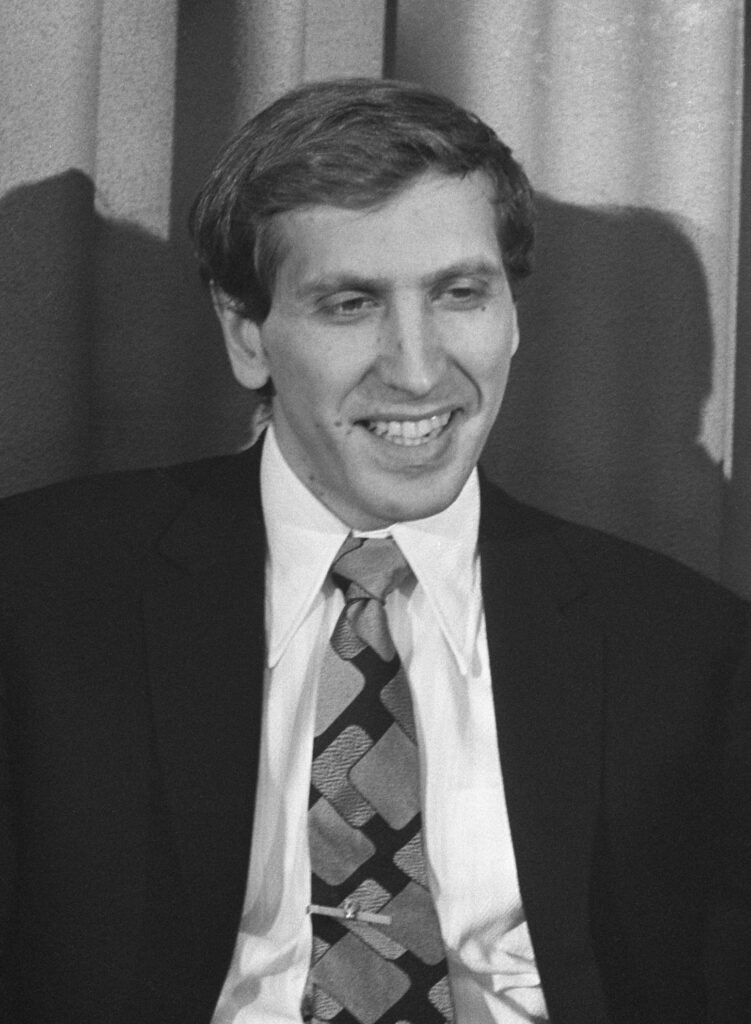
From the Match of the Century to a Quiet Grave in Iceland: The Extraordinary Story of Bobby Fischer
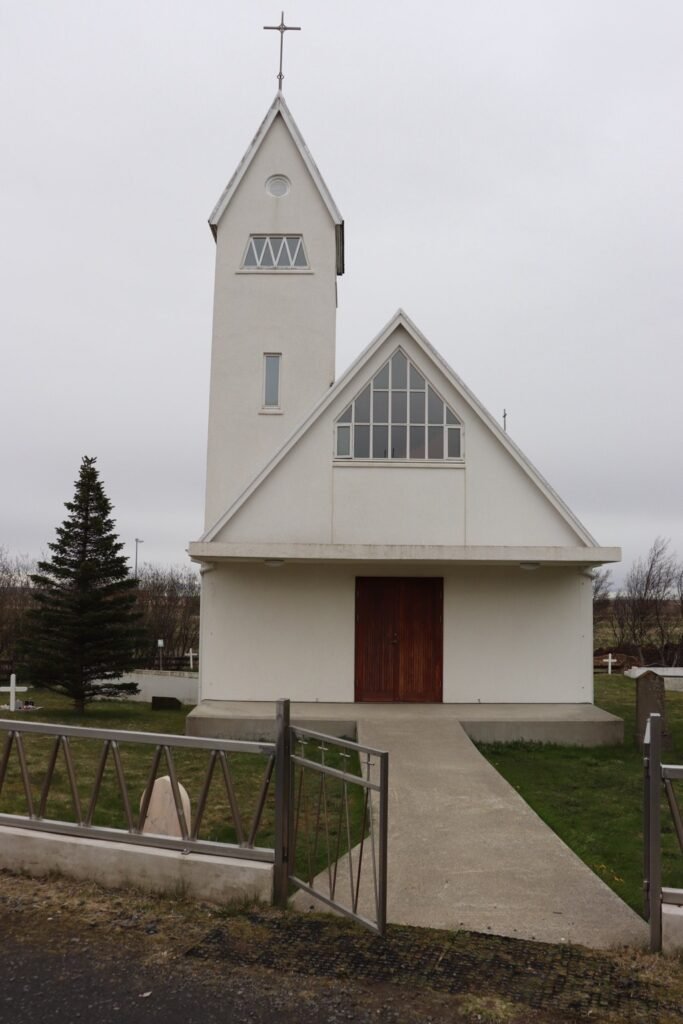
In South Iceland, not far from Selfoss, stands the small Laugardælir Church. There is no monumental memorial, no huge sign and no tourist spectacle to suggest that one of the most unusual stories in the history of world sport ended here.
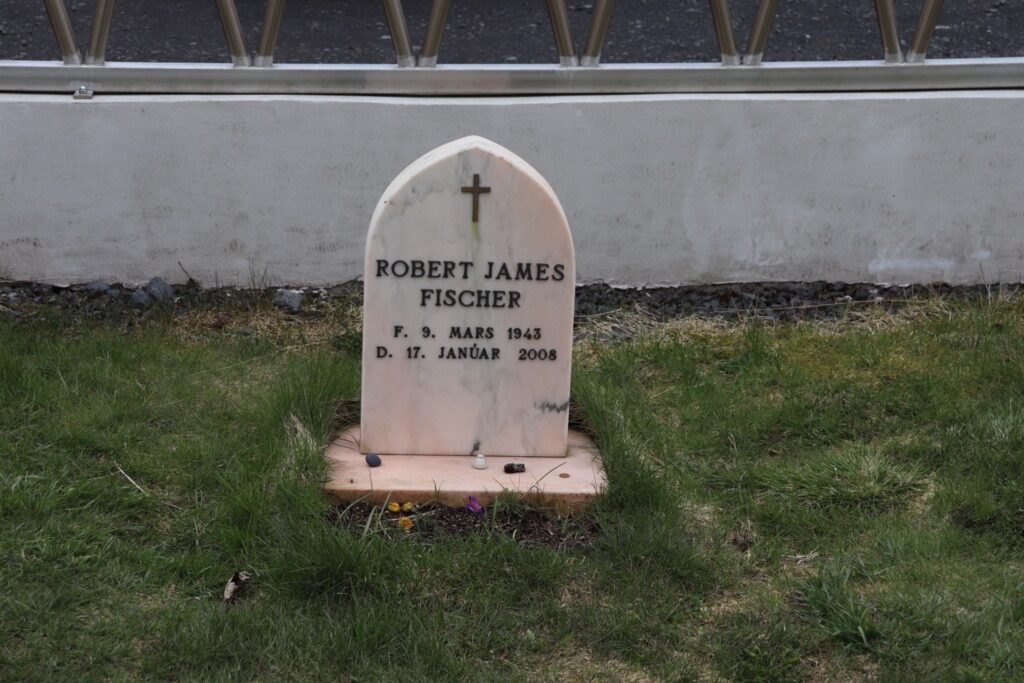
In the small cemetery, beneath a simple gravestone, lies Robert James “Bobby” Fischer.
The man who, decades earlier, had placed Reykjavík at the centre of the world’s attention.
The man whose chess match grew far beyond the boundaries of sport.
And the man for whom Iceland, many years later, became his final home.
Reykjavík, summer 1972: chess becomes much more than a game
To understand why Fischer’s story remains so closely connected with Iceland, we need to return to 1972.
The Cold War was at its height. The United States and the Soviet Union competed in politics, technology, the space race, sport — and prestige.
Then a chessboard in Reykjavík became another symbolic battlefield in that rivalry.
On one side sat Boris Spassky, the reigning world champion and representative of the Soviet chess school that had dominated the game for years.
On the other was Bobby Fischer, the eccentric American genius who had reached the top through an almost obsessive devotion to chess.
Their contest for the world championship was held in Reykjavík during the summer of 1972 and soon became known as the “Match of the Century.”
Suddenly, chess games were being followed even by people who had never moved a piece on a serious chessboard. Every move carried sporting weight, but the public saw something much larger in the contest — a symbolic clash between two superpowers.
Small Reykjavík found itself under the spotlight of the world’s media.
The match that almost never began
Fischer was no ordinary challenger.
He disputed the prize fund, playing conditions, cameras and organisation. He arrived late in Iceland, lost the first game and forfeited the second without playing after a disagreement over filming conditions.
It seemed that an event attracting worldwide attention might collapse almost before it had begun.
But it did not.
Fischer returned to the board.
And he started winning.
After 21 games, the score was 12½–8½. Boris Spassky lost the title and Bobby Fischer became the 11th World Chess Champion.
Soviet dominance of the world championship had been broken.
And Reykjavík had secured a permanent place in chess history.
After the greatest victory — withdrawal
Fischer’s victory was expected to mark the beginning of a long reign.
Almost the opposite happened.
Fischer increasingly withdrew from public life and competitive chess. When no agreement was reached in 1975 over the conditions for defending his title against Anatoly Karpov, he lost the world crown without playing a match.
A man who only three years earlier had been one of the most famous sporting figures in the world almost disappeared from the great stage.
Twenty years after Reykjavík, in 1992, he again played Spassky, this time in what was then Yugoslavia. That match brought him into serious conflict with the US authorities because of sanctions in force at the time.
Years later, Fischer’s life was far removed from the spotlight of 1972.
And then Iceland entered his story again.
The country of his greatest triumph becomes a refuge
In 2004, Fischer was detained in Japan over problems with his US passport and faced the possibility of deportation to the United States.
His situation attracted considerable attention in Iceland.
For many Icelanders, Fischer was not simply a former world champion. He was the man whose 1972 match had brought enormous international attention to their country.
In March 2005, Iceland’s parliament, Alþingi, granted him Icelandic citizenship.
More than three decades after arriving in Reykjavík to conquer the chess world, Fischer returned to Iceland to live.
The circle was slowly closing.
His final years in Iceland
His return was nothing like the arrival of a former global star.
Fischer mostly lived a private life. He did not chase the spotlight that had followed him in 1972, nor did he try to rebuild his former fame.
Iceland became his final home.
He died in Reykjavík on 17 January 2008, at the age of 64.
Several days later, he was buried in the small cemetery beside Laugardælir Church, near Selfoss.
No monumental mausoleum.
No enormous memorial.
Only a simple stone bearing the name of a man who once made the world stop and watch a chessboard.
One of South Iceland’s most unusual places
Today, thousands of travellers pass through this part of Iceland every day.
Some of the country’s best-known natural attractions are nearby. Cars and buses travel the roads of the south in search of waterfalls, geysers, volcanoes and the landscapes that bring visitors to Iceland from all over the world.
Yet a little away from the main tourist routes lies Laugardælir.
A small church.
A cemetery.
And Fischer’s grave.
Selfoss is also home to the Bobby Fischer Center, dedicated to his life, chess and the historic 1972 match.
But perhaps Fischer’s Icelandic story is best understood here, in a place without grand scenery or spectacle.
From the spotlight to silence
There is something almost cinematic about Fischer’s relationship with Iceland.
When he first arrived in 1972, television cameras and journalists from around the world were waiting, along with an opponent backed by the most powerful chess tradition of the era.
When he returned in 2005, he was a much older man asking the same country for something entirely different.
Not a title.
Not fame.
But a place where he could stay.
Iceland gave him both.
Here he achieved the greatest victory of his life.
And here, thirty-six years later, his story came to an end.
Today, a simple stone in a small Icelandic cemetery bears the name:
Robert James Fischer
1943–2008
It is difficult to imagine a greater contrast.
From Reykjavík in 1972, when the world followed his every move — to the silence of Laugardælir.
Perhaps that is why this place says more about Bobby Fischer than any grand monument could.
Because Iceland is not only a land of spectacular landscapes.
Sometimes its best stories are found in places you could easily pass by.
If you do not know what happened there.